
Why we stopped doing pupil of the week
If you attended primary school in the last 20 years you will likely be familiar with pupil of the week awards. These are usually given out during a celebration assembly and can be for anything. Every child in the class will get one at some point in the school year. When they started in schools they could have been an encouraging step away from older behaviourist strategies such as table points, star charts, traffic lights, etc as they focused more on character traits and effort rather than complying with adult expectations.
The thinking behind pupil of the week was to celebrate each child and boost their self esteem - which is of course a good thing! The difficulty is that in most cases these awards didn’t replace the behaviourist reward systems. Continuing to run with these strategies alongside pupil of the week led to the value remaining firmly on the adult’s approval, rather than the child’s achievement. So in the weeks (sometimes up to 29) a child was waiting for their “turn” to get the award, the message they were receiving was still conditional acceptance and competing for approval.
When I started working in Olderfleet Primary in January 2026, a number of staff asked if we were going to look at pupil of the week. They had already moved away from a reliance on reward systems a number of years ago and we are now at a place where we don’t need them. The culture in our school is one where we teach routines, support needs underlying behaviours, focus on real life consequences and restore ruptured relationships. However, like most schools, we still operated pupil of the week at a weekly celebration assembly. After a couple of decades it was time to have a review of how it worked in the wider context of our school approach.
We agreed that pupil of the week gave us an opportunity to:
notice our children
celebrate achievements
But we also noted that it:
hindered growth mindset, independence and resilience as there was nothing the children could do to impact on when they would receive a pupil of the week award (you could be trying your very best but someone still has to be the last one to be picked)
negatively impacted the wellbeing of the children who have not worked out the system (they feel unnoticed each week they are not picked)
lost meaning for the children who have worked out the system
In our review we looked at how we could tweak pupil of the week to minimise the drawbacks, but as a school, one of our core values is to aim high so we decided to take things a step further and we stopped doing pupil of the week.
What We Do Instead
We notice the hundreds of everyday successes and achievements of every pupil. We don’t limit ourselves to recognising only a few at a time.
A new approach to assembly
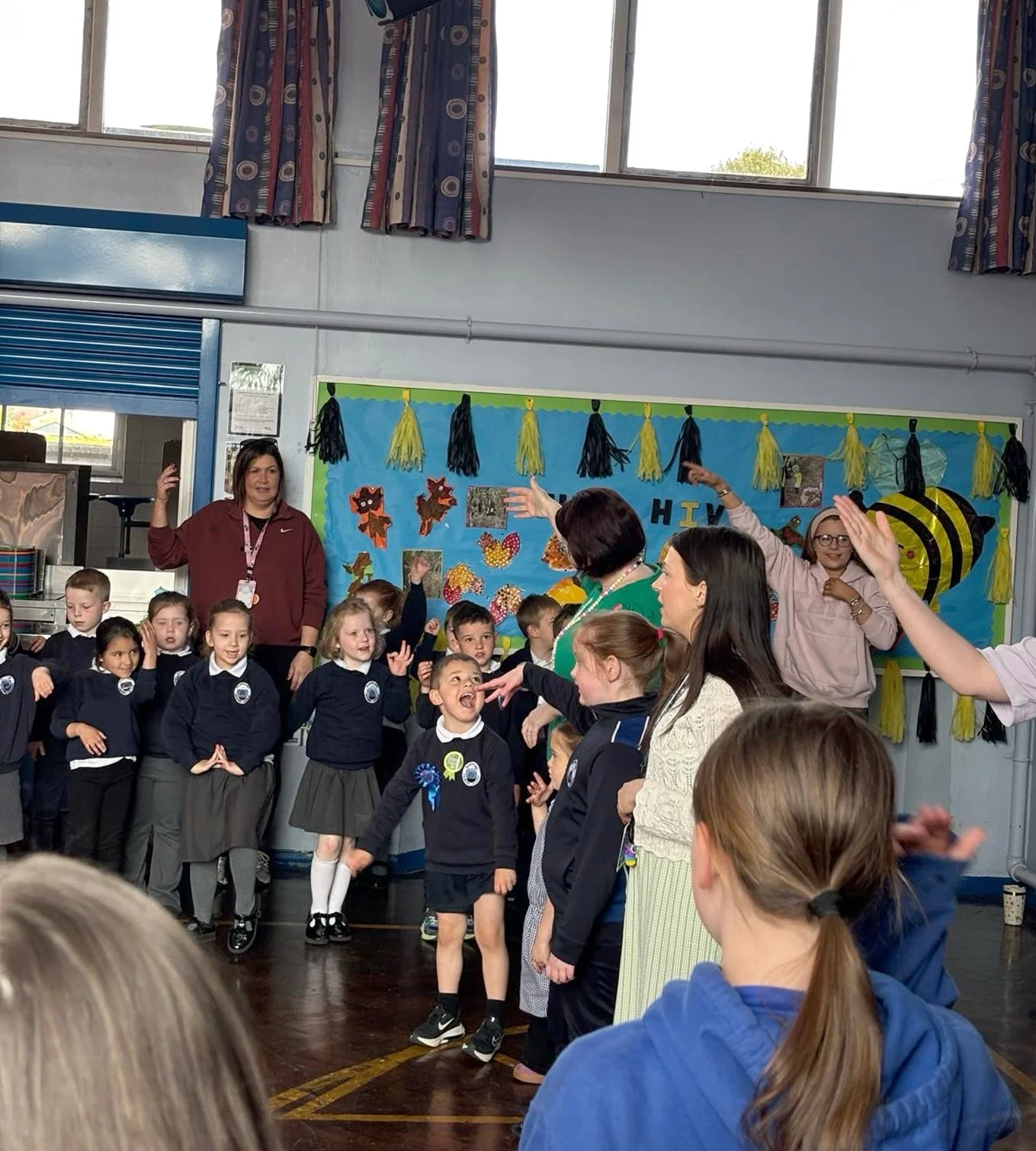
Our weekly assembly has shifted emphasis from celebration to connection and belonging to the Olderfleet family. Our classes sit in a circle around the hall so that we can see each other and encourage that sense of connection between the age groups. We sing together, we celebrate birthdays, we share our learning. Everyone comes to assembly including Mrs Montgomery in the office and Mr Keenan our caretaker.
The weekly learning journals
Every Friday our children reflect on their week with their learning journal. They identify their own achievements, set their own goals and write messages to their teacher. This allows every child to be noticed every week and builds self awareness. Rather than figuring out if they’ve made progress by whether or not they got a certificate or our praise, they start to recognise their own successes.
This quote from Alfie Kohn probably sums up best the outcome we want for the children in our Olderfleet family.
“I want her to share her pleasure with me, not look to me for a verdict. I want her to exclaim, “I did it!” (which she often does) instead of asking me uncertainly, “was that good?”
Stopping pupil of the week has taken us a few steps closer to this outcome.
Rachel Galbraith, Principal